
Menu
Looking to rebrand? Maybe you just need a brand refresh
When a founder asks for a rebrand, we first ask what led them there. Often a brand refresh is the better route, and sometimes it is the other way round.
A founder or brand manager approaches us and says, "We need a rebrand." Our first thoughts? "What has led them to this decision? And is it the right decision for their brand?"
From our experience with established brands looking to rebrand, we always start by identifying what has brought them to this point. Often it's just a feeling that their branding no longer feels right, and it's actually not a rebrand they're looking for. A brand refresh is the better route. Other times, when they think they just need to give the brand identity a little update, we find out they need a proper rebrand.
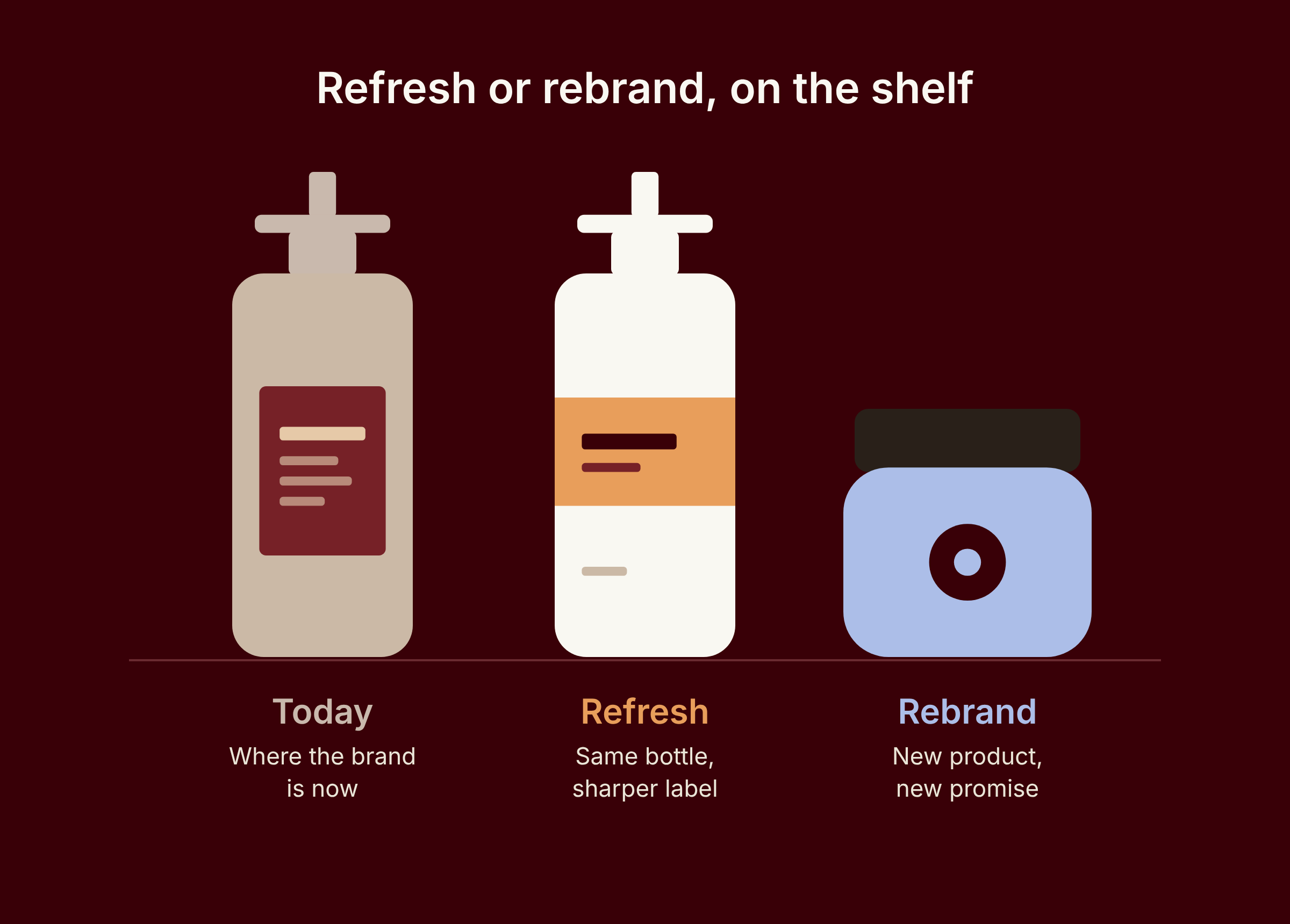
So what's the difference between a rebrand and a brand refresh?
How we gauge when a brand needs a rebrand
- The brand is expanding to new markets or new target audiences. This changes how it positions itself, so it can resonate with the new audience.
- The brand is expanding its service or product line, which affects its positioning and value proposition. Its brand DNA and identity need to cover the new direction, so the brand story conveys what it offers.
- The brand has a change of management or a change of core values. For example, if a brand decides to become more sustainable, or to stand more strongly for innovation, this greatly affects its brand DNA and storytelling.
- The brand is simply too outdated and needs to show up in a way that carves out its own distinct space in the market.
- The brand is changing its name. This mainly affects the brand identity, but the brand DNA and storytelling should also reflect the vision behind the decision.
- The brand has faced a serious crisis. It now needs to show its audience its accountability and its determination to change for the better.
- The brand was built without a clear brand strategy and identity, and has grown without a clear direction or system, making its execution difficult, inconsistent and incoherent. Brands without a clear brand DNA and identity from the start often end up in a constant loop of price wars, relying on aggressive sales tactics to survive.
A rebrand is much more than changing the look and feel of the brand. As branding specialists, we see it as an overhaul that affects not only the logo and colours, but the company's mission, the services it offers, the employee mindset, the brand experience, and essentially every touchpoint. If a client wants to change the logo, the colour palette or certain ways of creating visuals, a rebrand may not be necessary.
What a brand refresh is
A brand refresh makes minor but clear changes to the brand DNA and storytelling, while the core concept of the brand stays the same. For example, a heritage restaurant moves to a new, more upscale location and needs to offer a slightly more premium menu. A refresh lets the brand keep its heritage and its appeal to existing loyal customers, and stay mostly unchanged in its essence.
Another example: a fitness studio that has existed and evolved organically, but now needs more distinct storytelling and an identity that stands out and is more memorable to its target audience. The core concept stays the same. Our role in a brand refresh is to strengthen it, refine it and bring it to its full potential.
When the change is the wrong size
Too big: rebranding when a refresh was enough
The more visible mistake is rebranding when the brand only needed a refresh. A full rebrand is a fresh start, built on proper research and rebranding strategy. It often involves in-depth interviews with management, the operations team, and existing and desired customers, to identify which brand assets to keep and which to let go of.
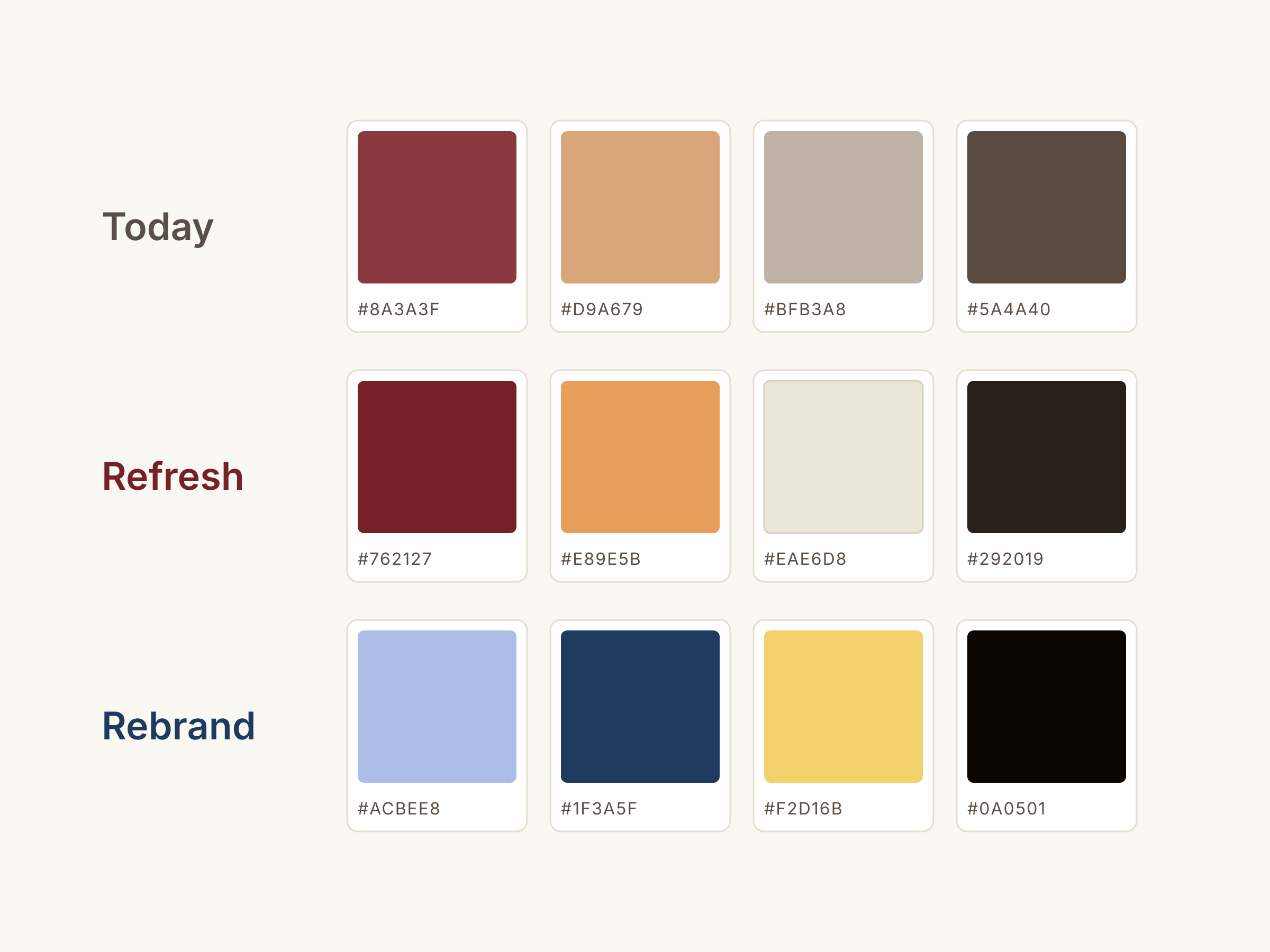
Big visible changes to the logo or colours may feel like proof that something is moving. But they throw away recognition the brand has already built, when the rebrand wasn't necessary in the first place. A rebrand should be necessary from both the business side and the customer side.
When a smaller change only needs a refresh
A small change in product or service offerings, a clear renovation, or maybe looking to freshen up the brand concept? A rebrand may not be necessary. A brand refresh will update and refine the brand DNA and its identity, but it still speaks to the customers the business already has. The changes will be clear improvements to the branding, but they stick to its core and may be subtle.
How we work out which one your brand needs
We start with what customers already recognise and value, before talking about anything new. For a consumer brand, that means the shelf, the reviews, what people search for and what the sales team keeps hearing. Then we look at where the business is going over the next few years. If the two still line up, the job is a refresh: keep the parts your audience recognises and connects with, and fix the rest. If they have drifted apart, or no longer connect with your brand, the job is a rebrand, starting with in-depth strategy before any design work happens.
Questions to ask about your own brand
- Why do you think your brand needs to change? What business decision has led to this? It shouldn't come down to personal preference or feelings.
- Do customers choose you today for the reason you want to be chosen?
- What does a loyal customer look for on the shelf or in a search, and is it worth keeping?
- Has your audience, price point or product range changed since the brand was created?
- Does your name still fit everything you sell, and everything you plan to sell?
- When a new product launches, does the brand keep everything coherent, or does every launch bring a new look?
- Has what your brand stands for changed?
- Is your frustration with how the brand looks, or with what it says?
If most of your answers point to the look and feel, a brand refresh should be enough. If they point to the audience, the brand promise or the range, it is time to think about a rebrand.
Still not sure what you need? We've guided many clients through rebrands and brand refreshes, from skincare and restaurant brands to consulting agencies and wellness spaces. Let's have a chat about your brand, and we'll help you from there.
Want this applied to your brand? Let's talk.
A free consultation, honest first thoughts, reply within one business day.
Book a free consultation